Remixing as been around for awhile, and for a long time people have got other peoples works and colloborated together to create new works that include all the information.
If a traditional twentieth century model of cultural communication described
movement of information in one direction from a source to a receiver, now
the reception point is just a temporary station on informations path. If we
compare information or media object with a train, then each receiver can be
compared to a train station. Information arrives, gets remixed with other
information, and then the new package travels to other destination where the
process is repeated.
This paragraph taken from the text is the best description of what remixing is today, and what is happening with the internet and the ammount of information that is being circulated around, and the need for open source media and material is increasing as more and more users get online to add in there ideas and inputs into different ideas and concepts.
12:56 AM
Categories:
Author: Antony Radley

REAL LIFE NETWORK
This is an image of my real life network that I explored, it shows the doors I take on the way into university, and the social interactions that take place. The idea from this was taken from the first model, and the hinges it has to use to open up, so I integrated that idea into a door where I interact with this movement, and all the people that use it.
5:14 PM
Categories:
Author: Antony Radley
Building a Drumkit!
5:10 PM
Categories:
Author: Antony Radley
 Abstraction - the process of formulating general concepts by abstracting common properties of instances.
In the brief the underlying idea was abstraction, being able to take one object or drawing, or take a piece of it and abstract it, or expand on that idea. Starting from a joint into a model would sound simple enough, but extracting just 1 idea of movement, that the joint makes and turning into a living, breathing model can be a different story.
Starting with the chosen joint, the knee you begin to explore and interpret what the joint does, how it moves, what happens during movement. Then map the data visually, and then using abstraction visually take out a piece of the puzzle and form it into 3d.
The idea behind this was using Santiago Calatrava, a famous Spanish architect, and extracting some basic principals from his designs, and integrating them with some of the basic principals of my draws that were creating during the exploration phase of the joint.
The final outcome and piece which is shown, is a form using planes and is connected using multiple strings or guide wires to lift and rotate the object to show translation and rotation that the joint first expressed. 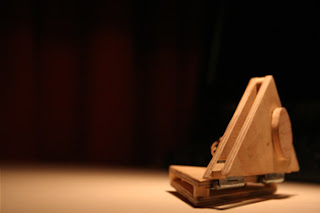
5:09 PM
Categories:
Author: Antony Radley




 Posts
Posts

